Discover & Develop Your Child's Learning Style

Get in-depth information about the many learning styles that people have. With the freedom of homeschooling, you can help your child in the best way for them. These resources will help you discover the different learning styles and how they can inform your curriculum choices, planning, and learning in your homeschooling. 

Understanding Your Child's Learning Style
Cognitive Styles and Learning Strategies: Understanding Style Differences in Learning and Behaviour
First Published in 1998. Routledge is an imprint of Taylor & Francis, an informa company.
Raising Topsy-Turvy Kids: Successfully Parenting Your Visual-Spatial Child

Understanding how children learn best allows you to meet their needs and help them succeed. A visual-spatial learner remembers things in pictures and learns better with visual clues and strategies. This book addresses those needs and helps you figure out how to encourage this type of learner in your homeschool environment. 

Different Brains, Different Learners: How to Reach the Hard to Reach
Nearly 40% of all students have some kind of learning challenges, yet many go undetected. This practical comprehensive guide has been written that links the latest brain research with teaching strategies to reach you most frustrating, hard-to-reach learners. It's packed with powerful tools, techniques, and strategies that can actually help students improve brain function without resorting to medical interventions.

Arm yourself with powerful knowledge for solving difficult learning problems; and discover specific how-to strategies for turning a borderline student into a confident achiever. 

Right-Brained Children in a Left-Brained World: Unlocking the Potential of Your ADD Child
Understanding your child's learning style can help with challenges in learning, improving outcomes in reading, writing, and behavior. This book offers strategies for understanding your child's learning style and presents tools that you can use to become more successful in your homeschooling. 
How to Homeschool: Determine Your Child’s Learning Style

One of the first steps you should take when embarking on homeschooling is determining your child's learning style. Most people tend towards one of the four main learning styles. This means that they are more successful in learning when the learning and teaching corresponds to this style. Few people are only one learning style, so exploring the different styles is helpful. This guide details four learning styles: kinesthetic, visual, auditory, and tactile. 

What’s My Child’s Learning Preference?

Discover and unleash your child's superpower! Your observations about your child can help you understand his/her particular learning style and preferences. These really are your child's superpowers for learning. Insight into learning styles can help you choose curriculum and can guide your homeschool planning, resulting in enhanced learning, improved attitudes, and more enjoyment for you child and for you too. 

Learning Styles and Hemispheric Dominance—Right or Left Brain: Which is Dominant in Your Family?
This is part two of a set of articles discussing learning styles and hemispheric dominance. Here Karen M. Gibson focuses on the theory of right-brain/left-brain dominance and some of the research and theories surrounding this concept. She also details some strategies for learning in response to understanding your child's natural patterns and styles of learning.
Upside-Down Brilliance: The Visual Spatial Learner
Dr. Linda Silverman coined the term "visual-spatial learner" to describe the special and unique gifts of people who learn best through seeing and with images. This guide is a great resource as you support your homeschooling visual learner in discovering the best ways to learn and succeed. 
In Their Own Way: Discovering and Encouraging Your Child's Multiple Intelligences
Children learn in differing ways. Thomas Armstrong specializes in helping parents identify the unique areas in each of our children that enhance their special way of learning and expressing creativity. This work on multiple intelligences talks about the eight different kinds of multiple intelligences, showing you how to discover your child's particular areas of strength. 
Learning Styles: Reaching Everyone God Gave You to Teach
This book offers helpful and practical strategies about the different ways that kids acquire information and learn, and then use that knowledge. Kids' behavior is often tied to a particular learning style and understanding that fact will help parents respond to their child in ways that decrease frustration and increase success, especially in a homeschooling environment. 
How to Determine Your Child's Learning Style
In Their Own Way: Discovering and Encouraging Your Child's Multiple Intelligences
Children learn in differing ways. Thomas Armstrong specializes in helping parents identify the unique areas in each of our children that enhance their special way of learning and expressing creativity. This work on multiple intelligences talks about the eight different kinds of multiple intelligences, showing you how to discover your child's particular areas of strength. 
Discovering Your Child’s Learning Style

Everyone has their own preferred way of learning. Learning styles can be generally divided into three types: visual, auditory, and kinesthetic learning styles. Discovering your child's learning style will be of benefit to both your child and to you too. By understanding these learning styles, you can better choose curriculum and plan out a strategy that will work best for you and your child. 

Learning Styles: Reaching Everyone God Gave You to Teach
This book offers helpful and practical strategies about the different ways that kids acquire information and learn, and then use that knowledge. Kids' behavior is often tied to a particular learning style and understanding that fact will help parents respond to their child in ways that decrease frustration and increase success, especially in a homeschooling environment. 
How to Determine Your Child's Learning Style

Children process information and learn in different ways. There are three primary ways in which people learn: visual, auditory, and kinesthetic. When you discover how your child learns, you can help shape their educational experience to prioritize this primary learning style, while also ensuring a well-rounded education. 

The Way They Learn
The learning-styles expert, Cynthia Ulrich Tobias,  gives parents a better understanding of the types of learning approaches that will help their children do better in school and at home. She offers practical advice for teaching in response to your child's strengths, even if his or her learning style is different from yours. 
Determining Your Child's Learning Style

Most students use a combination of learning styles, drawing from the four main types: visual, auditory, reading/writing, and kinesthetic. Responding with the right approach to your child's learning style can make all the difference when it comes to your child learning, understanding, and remembering educational material. With understanding of your child's learning style, you can more effectively choose materials and methods to emphasize his or her strengths rather than work against them. 

Quiz: What's Your Child's Learning Style?

Knowing and understanding your child's learning style is the key to homeschooling success. This short quiz will help you determine what ways of learning are best for your child. 

The Learning Style Quiz

How do I know what my child's learning style is? This quick quiz can help you figure it out. There are lots of combinations of different learning styles and usually children are not just one single style. Everyone learns in a variety of ways. Understanding this can help you re-evaluate and adjust to your child's particular learning style. This quiz focuses on the three main learning styles: auditory, visual, and kinesthetic. 

How To Identify Children’s Learning Styles

An appreciation of your child's primary learning style will help you support them in learning at home. It is also important to understand your own learning style if that is different from your child's. First, identify your own learning style of one of the four primary types: visual learner, kinaesthetic learner, auditory learner, and logical learner. 

Discover Your Children's Gifts

This comprehensive work on children's learning styles and creativity expression is a tremendous help to parents as they begin homeschooling. The authors discuss how God gifts children in different ways with different ways of learning and expression. This guide will help you identify your child's personality gifts and help them reach their full potential. 

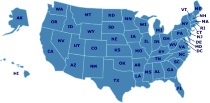
Looking for Another State?
Featured Resources

As an Amazon Associate, we earn from qualifying purchases. We get commissions for purchases made through links on this site.

Perrine's Sound & Sense: An Introduction to Poetry
Perrine's Sound and Sense is a fantastic book for studying poetry with your children. It is a great resource for high school students. It includes clear and thorough explanations of devices, forms, how to analyze poetry, and more, as well as a huge variety of poems, both classic and contemporary.
The Letter Factory Game
Teaches Phonics! The race is on! With two games in one, children play together and learn letter names and sounds with actions and music. Wacky Professor Quigley guides players every step of the way so no reading is required! Games automatically adjust to skill level, to keep children learning at just the right pace! 2 Games in 1: Counting Colors & Letters: Learn letter names and sounds by matching color cards to move around the board. Leaping Letters: Listen to the name or sound and then find th...
Homeschooling For Dummies
This comprehensive guide gets you off to a great start. From helpful advice on how to decide if homeschooling is right for you, to how to get started, to complying with all legal requirements, you'll find what you need at the beginning of your homeschooling. Also included are teaching tips, advice on networking, testing, curriculum, and more. 
The Story of the World
This book series by Susan Wise Bauer is another that is best enjoyed as a read aloud rather than seen as a history textbook. It is full of engaging stories, mixing facts and historical legends. The companion study guides offer questions, narration exercises, activities, crafts, and reproducible pages. There are also lists for each chapter of supplemental books that are easily found at your local library. Story of the World: History for the Classical Child, Volume 1: Ancient Times (From the Ear...
America's Spectacular National Parks
The concept of the national park is an American contribution to world civilization, and it remains a defining characteristic of our country. From the rocky shore of Maine's Acadia to the barren crater and lush rain forest of Hawaii's Haleakala, America's national beauty is celebrated and preserved in its national parks. This book retells the history of each park, describes its most important features and wildlife, and reproduces its gorgeous scenery in full-color photographs that will enthrall a...