The Legal Journey
Learn about the legal, social, political, and philosophical journey towards legal homeschooling in the United States.
The Legal Journey
On the Edge of the 21st Century
The right to home school is based on two fundamental principles of liberty: religious freedom and parental rights. Whenever one of these two freedoms is threatened, our right to home school is in jeopardy. Here are the battles we think home educators will be facing as we enter the next century:
HSLDA: Our History
Although HSLDA has changed over the past 30 years—in terms of the size of our membership and staff and our physical location—our original vision and purpose remain unchanged. HSLDA exists expressly for the purpose of advocating family and freedom.
The Good, The Bad, The Inspiring
A look back at the history of the Home School Lega Defense Association with Michael P. Farris, J. Michael Smith, Christopher J. Klicka, and David E. Gordon. Hear about the early years of HSLDA, the way home schooling has changed, and some of their most memorable cases.
The Politics of Survival: Home Schoolers and the Law
Twenty years ago, home education was treated as a crime in almost every state. Today, it is legal all across America, despite strong and continued opposition from many within the educational establishment. How did this happen? This paper traces the legal and sociological history of the modern home school movement, and then suggests factors that led to this movement's remarkable success.
Homeschooling Is Legal: A Brief History of Home School Legal Defense Association
This article, written in 1998 on the fifteenth anniversary of Home School Legal Defense Association (HSLDA), chronicles HSLDA’s growth.
The Battle of H.R. 6
House Resolution 6 of 1994 was a reappropriations bill for the Elementary and Secondary Education Act (ESEA). Ordinarily such bills deal with public education and would have little, if any, impact on home educators. But that year, a few small wording changes affected thousands upon thousands of home schooling families, and resulted in over a million phone calls to Congress.
Marking the Milestones: Historical Times
This timeline highlights the important milestones in the fight for homeschool freedom in the United States.
A Fifteen Year Perspective
When Michael Farris and Michael Smith founded Home School Legal Defense Association in March of 1983, home schooling was just a tiny blip on the education radar screen. The concept of parents teaching their children at home was relatively obscure, and the families who chose to follow this non-traditional education route were fairly certain to face opposition from the educational bureaucracy and following legal entanglements, as well as from their own friends and family.
The Lessons of H.R. 6
For eight days in February, 1994, the home schoolers of this nation gave Congress a lesson on the power of grassroots politics it is not likely to forget. It began when an amendment was introduced to H.R. 6, an enormous education reappropriations bill, which would have required all teachers in America to be certified in each and every course they teach. (See article on “The Battle of H.R. 6.”) This provision would have encumbered public schools—especially small public high schools. It would have seriously interfered with America’s private schools. But for home schools, the provision was the political equivalent of a nuclear attack. America’s home schoolers astonished Congress with a political counterstrike that was quick, effective, massive, and decisive. There are three central reasons why the home schooling community was able to respond in this manner.
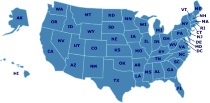
Looking for Another State?
Featured Resources
As an Amazon Associate, we earn from qualifying purchases. We get commissions for purchases made through links on this site.

Morning by Morning : How We Home-Schooled Our African-American Sons to the Ivy League
Home schooling has long been regarded as a last resort, particularly by African-American families. But in this inspirational and practical memoir, Paula Penn-Nabrit shares her intimate experiences of home-schooling her three sons, Charles, Damon, and Evan. Paula and her husband, C. Madison, decided to home-school their children after racial incidents at public and private schools led them to the conclusion that the traditional educational system would be damaging to their sons’ self-esteem...
The Mystery of History
The Mystery of History series is another alternative to traditional textbooks. The five volume set covers history from creation to present day, with a biblical worldview. This series is intended for grades K-8. Note that at this time, this series is not completed.
Montessori Reading
Montessori Reading is a beginning reading and writing program for elementary aged children. This series of books introduce phonetic letter sounds, phonogram combinations, reading simple sentences, and reading and writing words that name everyday objects, animals, etc. A teaching guide and a child's journal are included.

Recovering the Lost Tools of Learning: An Approach to Distinctively Christian Education
Author Douglas Wilson makes the argument that education must have a foundation of religion, which informs worldview. Education is the asking and answering of questions, and learning to read and write is simply the process of acquiring the tools needed to do that.

Montessori: A Modern Approach
Montessori: A Modern Approach has been called the single best book for anyone -- educator, childcare professional, and especially parent -- seeking answers to the questions: What is the Montessori method? Are its revolutionary ideas about early childhood education relevant to today's world? And most important, especially for today's dual-career couples. Is a Montessori education right for my child?Paula Polk Lillard writes both as a trained educators and as a concerned parent -- she has many yea...